
Healthy pantry: what to remove and what to stock
You open the pantry at 8 PM, hungry and not in the mood to cook. What you grab depends on what's in there. If there are cookies, you grab cookies. If there are nuts and oats, you grab nuts or make oatmeal. It's not about willpower. It's about what's within reach.
The pantry isn't a neutral storage space. It's a decision you make once a week (at the grocery store) that shapes dozens of daily decisions. Reorganizing it doesn't require throwing everything out or spending more money. It takes 30 minutes and a bit of criteria.
The NOVA system: a framework for understanding what's in your pantry
Before deciding what to remove and what to add, it helps to have a framework. The NOVA system, developed by researchers at the University of São Paulo (Monteiro et al., Public Health Nutrition, 2019), classifies foods into four groups based on their degree of processing:
Group 1: Unprocessed or minimally processed foods. Fruits, vegetables, legumes, eggs, fresh meat, fish, nuts, milk. These are the foundation.
Group 2: Processed culinary ingredients. Olive oil, butter, salt, sugar, flour. Used to cook Group 1 foods.
Group 3: Processed foods. Canned fish, cheese, bakery bread, canned vegetables. These are Group 1 foods transformed with Group 2 ingredients. They typically have 2-3 ingredients.
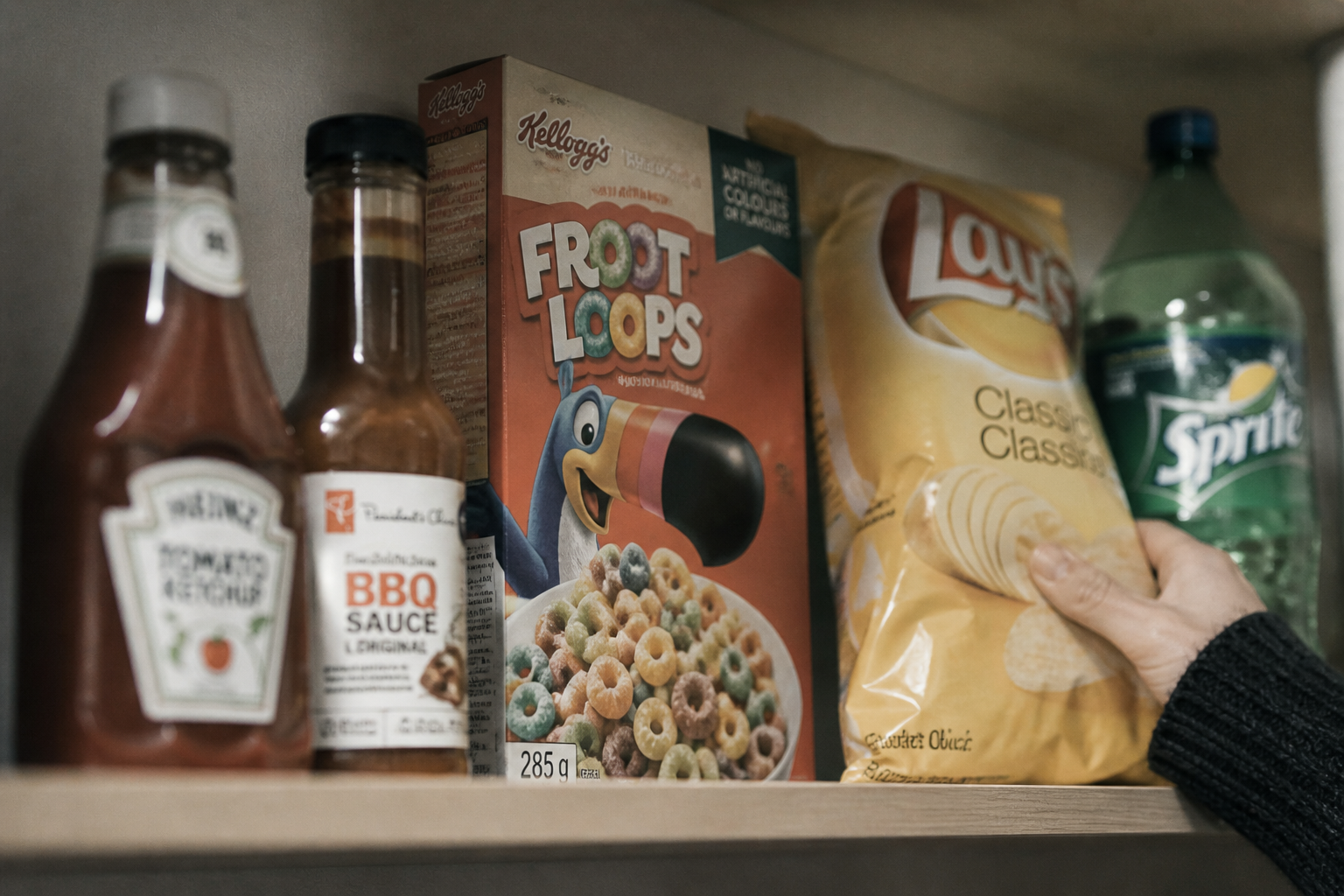
Group 4: Ultra-processed products. Industrial cookies, sodas, bagged snacks, sugary cereals, processed meats, commercial sauces. They have 5, 10, or 20 ingredients, many of which you wouldn't recognize as food.
A meta-analysis published in The BMJ (Lane et al., 2024) analyzed data from nearly 10 million people and found that higher ultra-processed food consumption is associated with greater risk of cardiovascular disease, type 2 diabetes, mental health disorders, and all-cause mortality.
You don't need to eliminate everything from Group 4. But your pantry's foundation should be Group 1 and Group 3, not Group 4.
What to remove (or drastically reduce)
We're not talking about throwing everything in the trash tomorrow. We're talking about not buying these products again when they run out, or buying them far less often.
Sodas and industrial juices. A liter of soda has about 100g of sugar. A carton of "100% natural" juice can have 45g of sugar per liter. It's fruit without fiber, which metabolically behaves like free sugar. The alternative: water, sparkling water, or unsweetened tea.
Commercial sauces. Ketchup, barbecue sauce, sweet soy sauce, bottled dressings. Most have sugar as the second or third ingredient. A squirt of ketchup (15g) has 4g of sugar. Seems small, but it adds up. The alternative: olive oil, vinegar, mustard, spices, lemon.
Bagged snacks. Potato chips, flavored rice cakes, tortilla chips. High in calories, sodium, and nutritionally uninteresting fats. A single-serving bag (30g) is around 150 kcal with very little protein or fiber. The alternative: unsalted nuts, dried fruit, homemade popcorn.
Sugary cereals. We've covered these in how to read nutrition labels. A bowl of "fitness" cereal can have 15g of sugar. The alternative: oats, unsweetened muesli, or cereals with less than 5g of sugar per 100g.
Industrial pastries and cookies. 450-500 kcal per 100g, high in sugars and saturated fats, low satiety. They're the clearest example of NOVA Group 4. No need to demonize them, but they shouldn't be the foundation of breakfast.
What to always have
These are foods that last weeks or months, are affordable, versatile, and nutritionally dense.
Legumes
Lentils, chickpeas, kidney beans, black beans. Dried or canned. They're the best value-for-money in nutrition: plant protein, fiber, iron, folate. A can of cooked chickpeas costs less than $1.50 and can make a complete meal with rice.
Per 100g of cooked lentils: 116 kcal, 9g protein, 20g carbs, 0.4g fat, 8g fiber.
Whole grains
Brown rice, oats, quinoa, whole wheat pasta, whole grain couscous. These are the energy base. The difference from refined versions is fiber and micronutrients. A study in The Lancet (Reynolds et al., 2019) found that for every 15g increase in daily fiber intake, all-cause mortality risk decreased by 5-9%.
Canned fish
Tuna, sardines, mackerel, mussels. Rich in protein and omega-3 fatty acids. Canned sardines provide about 24g of protein per 100g. They're one of the most accessible and affordable sources of long-chain omega-3s (EPA and DHA).
Nuts and seeds
Walnuts, almonds, peanuts, sunflower seeds, pumpkin seeds. High in healthy fats, protein, and fiber. A handful (30g) of almonds provides 170 kcal, 6g of protein, and 3.5g of fiber. The key is buying them unsalted and unroasted.
Extra virgin olive oil
The foundational fat of the Mediterranean diet. A meta-analysis in the Journal of the American College of Cardiology (Guasch-Ferré et al., 2020) found that consuming more than half a tablespoon per day was associated with a 14% lower risk of cardiovascular disease.
Basic spices and seasonings
Cumin, paprika, turmeric, oregano, black pepper, garlic powder, cinnamon. They don't contribute significant calories, but they contribute flavor. When the pantry has spices, cooking with simple ingredients becomes much easier. A bowl of lentils with cumin, paprika, and a drizzle of olive oil holds its own against any elaborate meal.
Crushed tomatoes
Canned or in cartons. Without added sugar (check the label). It's the base of dozens of dishes: pasta, legumes, eggs, rice. A 400g can costs about $1.
The 30-minute audit
You don't need to redo the pantry all at once. This exercise is meant to be done once, then adjusted with each shopping trip.
Minutes 0-10: Take everything out. Literally. Put everything from the pantry on the table or counter. Seeing it all together gives perspective.
Minutes 10-20: Classify. Make three groups:
- Stays: unprocessed or minimally processed foods, basic cooking ingredients, canned goods with 2-3 ingredients.
- Finishes and doesn't get replaced: ultra-processed items that have accumulated. Don't throw them out if you don't want to (wasting food makes no sense). But when they run out, don't buy them again.
- Gets substituted: products where a better alternative exists for the same use. Ketchup for mustard. Sugary cereal for oats. Vegetable oil for olive oil.
Minutes 20-30: Shopping list. Note what's missing from the essentials list. Legumes, whole grains, canned fish, nuts, olive oil, spices, crushed tomatoes.
Common mistakes
Thinking you have to spend more. Dried legumes, brown rice, oats, bulk spices, and olive oil are not expensive products. They're cheaper than most ultra-processed foods when you compare by kilo and nutritional density. A kilo of lentils costs under $3 and makes 6-8 servings.
Confusing "healthy" with "expensive and exotic". You don't need organic quinoa imported from Bolivia or cold-pressed coconut oil. Brown rice, chickpeas, canned sardines, and olive oil. That covers 80% of it.
Making a one-day revolution. If you go from an ultra-processed pantry to legumes and oats overnight, you'll probably revert in two weeks. Better to change gradually: this week you swap one thing, next week another.
Throwing out food as a symbolic act. There's no point in trashing what you already bought. Eat it, give it away, or let it run out. The change happens in the next shopping trip, not in the garbage.
It's not about perfection
A pantry doesn't have to look like an Instagram catalog. It can have cookies and also lentils. The goal isn't to eliminate everything "bad" but to make sure the foundation — what there's most of, what's most accessible, what you grab when you have no plan — is food that actually nourishes you.
If 80% of what's in your pantry is NOVA Group 1-3 food, and 20% is treats or convenience, that's a healthy pantry. There's nothing more to aspire to.
In summary
| Action | Why |
|---|---|
| Reduce sodas and industrial juices | 35-100g of sugar per liter, no fiber or satiety |
| Eliminate sweetened commercial sauces | Hidden sugar that accumulates; replace with oil, vinegar, spices |
| Swap bagged snacks for nuts | More protein, fiber, and healthy fats per calorie |
| Stock legumes | Best value-for-money in nutrition |
| Keep whole grains as a base | More fiber, more micronutrients than refined versions |
| Always have canned fish on hand | Accessible and affordable protein and omega-3s |
| Do the audit once | 30 minutes that reorganize weeks of decisions |
What's in your pantry is what you're going to eat. Not always, but most of the time. Spending half an hour thinking about it is probably the most efficient nutritional intervention there is.