
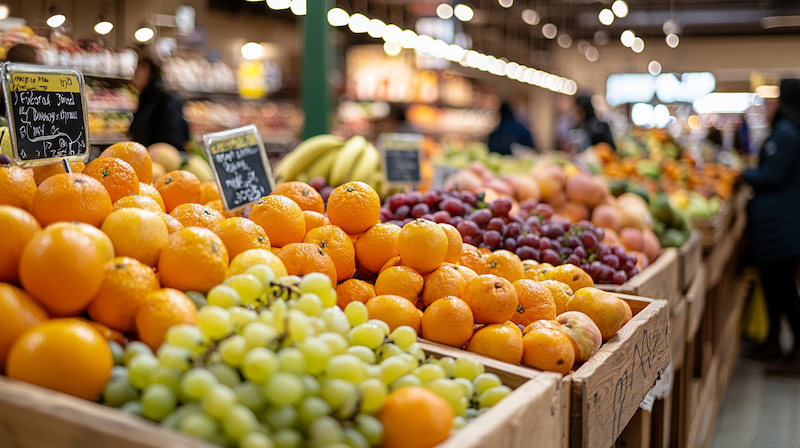
Fruit — how much to eat, what the science says, and how we track it
"I don't eat much fruit because it has too much sugar." If you've ever said or thought this, you're not alone. But the scientific evidence is so clear on this topic that it deserves its own article.
Fruit is not the problem. It never has been.
What the science says: more fruit, better outcomes
This isn't opinion. It's what the largest studies ever conducted show:
A meta-analysis published in the British Medical Journal (2017) with data from nearly 2 million people found that consuming 800g of fruits and vegetables daily is associated with the greatest reduction in risk of cardiovascular disease, cancer, and all-cause mortality.
The WHO recommends a minimum of 400g of fruits and vegetables per day (about 5 portions). Most people don't reach that.
A Harvard study with over 100,000 participants across 30 years concluded that people who eat more whole fruit have no increased risk of type 2 diabetes. In fact, certain fruits like blueberries, grapes, and apples were associated with lower risk.
Whole fruit is not free sugar. The fiber, water, and food matrix make the metabolic impact radically different from juice or processed food with added sugar.
How much fruit should you eat?
The evidence-based recommendation is simple:
| Recommendation | Amount |
|---|---|
| Daily minimum | 2 portions |
| Optimal | 3-4 portions |
| Is there a maximum? | No evidence of harm from excess whole fruit |
The philosophy behind how we track fruit
In One Step Health you don't have an endless list of fruits or a generic "fruit" option. You have the most common fruits that most people actually eat, organized so logging is fast.
The idea is simple: cover the color spectrum. Each color provides different nutrients, and if you look at your week and only see bananas, you know you need more variety. You don't need to know why — just varying colors already guarantees a good nutritional profile.
- Reds (watermelon, strawberries, cherries) → lycopene, anthocyanins
- Oranges (tangerine, orange, mango, papaya) → beta-carotene, vitamin C
- Greens (kiwi, pear, avocado) → vitamin K, lutein, fiber
- Yellows (banana, pineapple, dates) → potassium, energy
- Purples (plum, grapes) → anthocyanins, polyphenols
You don't need to memorize which nutrient each group has. Just vary colors and you're good.
What's a portion? Do I need to count the cherries?
This is the trap many apps (and many people) fall into: they tell you a portion of cherries is 10 pieces and you spend your time counting them. That's exactly what we want to avoid.
Let's be clear: no, you don't need to count the cherries. Or the grapes. Or the watermelon chunks.
A portion is a reference, not a limit
In One Step Health, "1 portion" means what you normally eat in one sitting:
- Cherries: a generous handful. Are they 10 or 20? Doesn't matter. A handful = 1 portion.
- Grapes: a bunch, what you grab from the fruit bowl. Don't count them.
- Watermelon: a couple of slices. What you cut yourself in summer.
- Strawberries: a bowl. The one you normally use.
- Banana: one. No ambiguity here.
- Apple: one. Same.
Fruits that come in pieces (banana, apple, orange, pear) are easy: 1 piece = 1 portion. Fruits that come in bulk (cherries, grapes, strawberries, watermelon) are measured as "what you eat in one go" = 1 portion.
What happens if you eat 20 cherries instead of 10?
Two things happen:
- You've eaten about 50 kcal more. That's the same difference as adding or not adding oil to your toast. Irrelevant.
- You've eaten more fruit. Which, as we've already seen, is exactly what the science recommends.
Put it in perspective: 20 cherries are about 100 kcal. A coffee with milk and a cookie is 200-300 kcal. Are you really going to worry about the cherries?
The practical rule
- Ate a bowl of strawberries? → 1 portion
- Ate two bowls? → 2 portions
- Ate half a kilo of watermelon by yourself on the terrace? → 2 portions and enjoy
If the portion was generous, log 2. If it was normal, log 1. You don't need more precision than that. The goal is to know how many times a week you eat fruit and what kind, not exactly how many cherries you had.
What if my fruit isn't in the app?
Maybe you eat a fruit that isn't on the list: peach, nectarine, figs, pomegranate, lychee, passion fruit... No problem. Pick the one that's most similar by type or color:
- Peach or nectarine? → Log as pear or apple (same caloric range, same structure)
- Figs? → Log as dates (dense fruit, similar profile)
- Pomegranate? → Log as cherries (red fruit, similar serving size)
- Lychee or passion fruit? → Log as tangerine (small tropical fruit)
- Cantaloupe? → Log as watermelon (practically flavored water)
Remember: the difference between fruits in the same color group is usually 10-20 kcal per serving. That doesn't move the needle. What matters is that you log it and that you vary, not that the exact food is on the list.
Glycemic index: does it actually matter?
The glycemic index (GI) measures how a food raises blood sugar. It's been useful in research but as a tool for choosing fruits it's nearly useless. The latest evidence shows that:
- GI is measured using 50g of carbohydrates from the food, not a real portion. To get 50g of carbs from watermelon you'd need to eat nearly 700g.
- Glycemic load (which does account for quantity) shows that virtually all whole fruit has a low or moderate load.
- As soon as fruit is eaten with other foods, the GI of the complete meal changes radically.
| Fruit | GI | Glycemic load (per portion) | Concerning? |
|---|---|---|---|
| Watermelon | 76 (high) | 4 (low) | No |
| Pineapple | 59 (medium) | 7 (low) | No |
| Grapes | 53 (medium) | 11 (medium) | No |
| Banana | 51 (medium) | 13 (medium) | No |
| Mango | 51 (medium) | 8 (low) | No |
| Orange | 43 (low) | 5 (low) | No |
| Apple | 36 (low) | 5 (low) | No |
| Strawberries | 25 (low) | 1 (low) | No |
Grapes have the highest GI among commonly consumed fruits (~53) and the highest glycemic load per serving (11). They're not bad — they're an excellent source of anthocyanins — but they're the fruit with the highest sugar density per volume. Moderate the amount without eliminating them.
Watermelon has a GI of 76, which sounds high. But a portion has only 11g of carbs. Its real glycemic load is 4. It's practically flavored water.
When does GI actually matter? For people with diagnosed type 2 diabetes or insulin resistance, under medical supervision. For everyone else, choosing fruit by its GI is like choosing a car by the color of its seats.
The basics to keep in mind
1. Whole fruit, not juice
A glass of orange juice has the sugar of 3-4 oranges without the fiber. Fiber is what regulates absorption and creates satiety. A BMJ study (2013) showed that replacing juice with whole fruit reduces the risk of type 2 diabetes.
2. The banana is not your enemy
The banana has a bad reputation for no reason. It provides potassium, vitamin B6, and fiber. Compare it with a cereal bar (more sugar, less fiber) or an oat milk latte with syrup. If you train, it's one of the best options before or after exercise.
3. Fruit doesn't make you fat
There is no population-level evidence that whole fruit contributes to weight gain. The satiety that fruit provides (through fiber and volume) more than compensates for its caloric content.
4. With the skin when possible
The skin of apples, pears, and peaches concentrates fiber and polyphenols. If you can, eat it.
5. Fresh, frozen, or canned
Frozen fruit retains virtually all its nutrients. In some cases (like blueberries), freezing preserves anthocyanins better than storing fresh. Canned fruit in its own juice (not in syrup) also works.
In summary
| Myth | Reality |
|---|---|
| "Fruit has too much sugar" | Whole fruit is not free sugar. Fiber changes everything |
| "Bananas make you fat" | Fiber and potassium. They don't |
| "Watermelon has high GI" | Its real glycemic load per portion is 4. Irrelevant |
| "You should limit fruit to lose weight" | No evidence for this. Zero |
| "Grapes are bad" | Medium GI (53), GL 11. Moderate the amount but don't eliminate them |
| "Juice is the same as fruit" | No. Juice is sugar without fiber |
| "My fruit isn't in the app" | Pick the closest match by color. The difference is irrelevant |
Eat fruit. Eat more fruit. Vary the colors. And if your week in One Step Health shows three or four different colors, you're on the right track.